


Oil-filled transformers are essential components of modern electrical networks, but they also present a significant environmental risk. A transformer can contain a large volume of insulating oil, and an accidental leak can quickly spread beyond the equipment itself. Without suitable containment, oil may reach the ground, drainage systems, surface water or groundwater.
This is why transformer oil spill containment plays an important role in the design and operation of electrical substations. An effective system must not only retain oil in the event of a failure, but also help control contaminated water and facilitate safe maintenance.
Transformer oil is used for electrical insulation and cooling. Although its primary function is technical, a large accidental release can have serious environmental and operational consequences.
Environmental contamination
When oil escapes from a transformer, it can infiltrate the soil or enter nearby drainage networks. During heavy rainfall, contaminated water can also be transported away from the substation and reach natural watercourses.
Preventing this type of uncontrolled discharge is particularly important in installations located near sensitive environmental areas, industrial sites or urban infrastructure.
Operational and financial consequences
An oil spill can lead to much more than an environmental incident. Cleanup operations may require specialized equipment, contaminated materials may need to be removed, and access to the transformer can be restricted during remediation.
Depending on the severity of the incident, the resulting costs can include cleaning, equipment repairs, waste management and service interruptions.
Fire and safety considerations
Transformer oil can also contribute to fire propagation when a transformer fails. Containment therefore forms part of a wider risk-management strategy, alongside fire protection, drainage control and emergency planning.
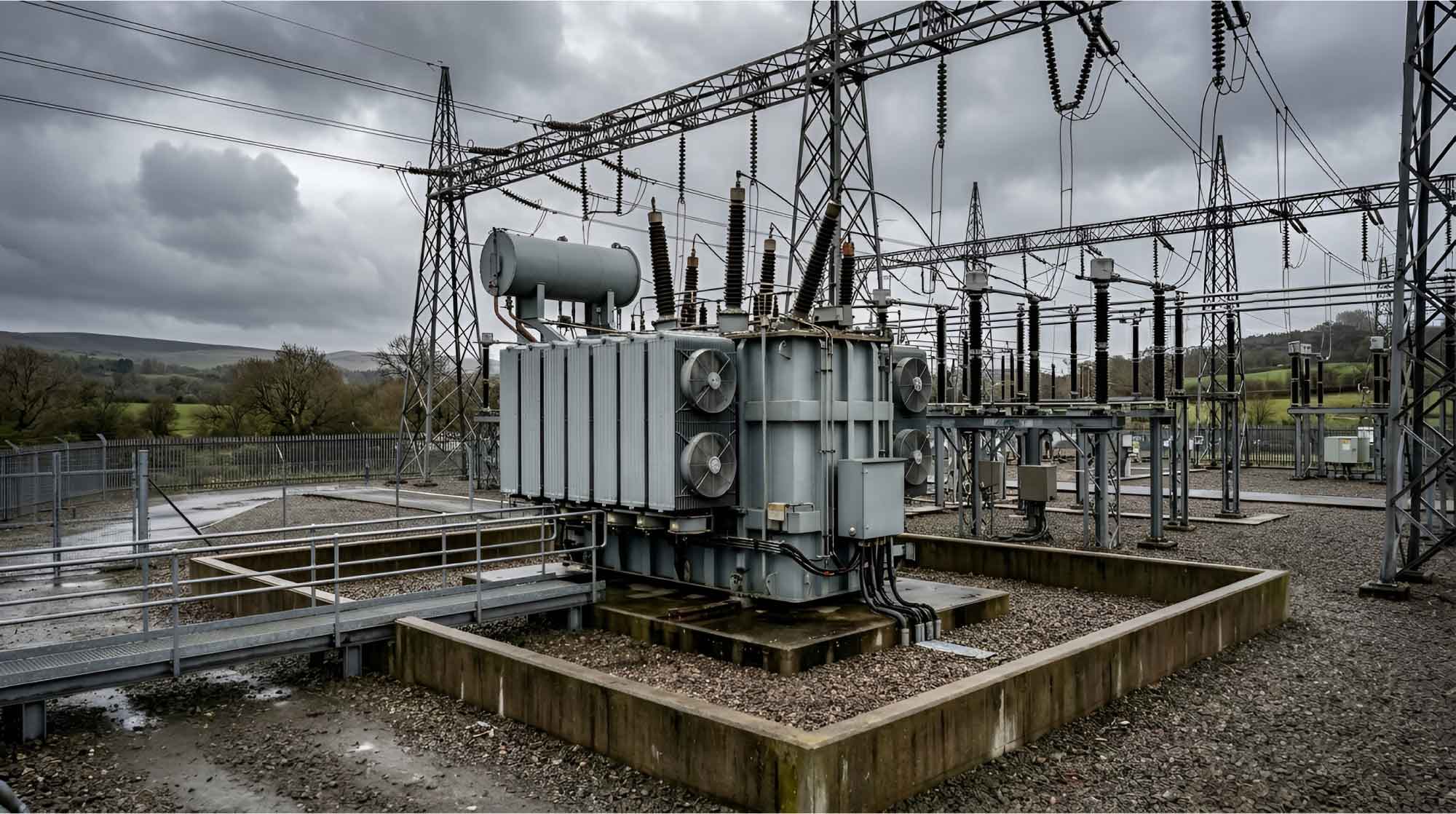
Transformer oil spill containment refers to the systems used to prevent insulating oil released from a transformer from escaping into the surrounding environment.
The principle is based on creating a controlled area around the transformer where leaked oil can be collected and retained. Depending on the installation, this can involve bunds, retention areas, trays, pits or other dedicated containment structures.
A containment strategy can include several levels of protection. The transformer itself provides the primary barrier, while a secondary containment system acts as an additional safeguard in case of tank damage, pipe failure or another accidental release.
The objective is straightforward: keep the oil contained, prevent uncontrolled discharge and make the incident easier to manage.
A suitable containment solution needs to address more than simply providing physical space for leaked oil.
Sufficient containment capacity
The system must be capable of handling the quantity of oil that could potentially be released during a major incident. The volume required depends on the transformer and the specific configuration of the installation, while also taking rainwater accumulation into account.
Protection against uncontrolled discharge
Containment should prevent oil from reaching soil, drainage networks and surrounding areas. Drainage points therefore need to be carefully managed so that potentially contaminated liquids are not discharged without treatment or control.
Resistance and long-term durability
Outdoor electrical substations are exposed to weather, temperature variations and demanding operating conditions. Containment systems therefore need to remain reliable over time and withstand exposure to hydrocarbons, UV radiation and changing temperatures.
Easy inspection and maintenance
Accessibility is another important consideration. A containment system should make inspections and maintenance practical while allowing operators to identify and manage accumulated oil or water efficiently.
Oil containment becomes more complex when a transformer is installed outdoors and exposed to rainfall.
A containment area may collect both transformer oil and rainwater. Simply retaining this mixture can create additional maintenance and disposal issues. For this reason, effective transformer protection often requires a solution capable of managing stormwater as well as accidental oil releases.
A controlled drainage and filtration system can help separate contaminated liquids from clean rainwater and reduce the risk of uncontrolled discharge. Depending on the installation, filtration can therefore complement secondary containment and provide an additional environmental safeguard.
This approach is particularly relevant for substations where large quantities of rainwater may accumulate over time.
Akhelec offers a broad range of solutions designed to address the different stages of transformer oil spill management: containment, water treatment, and monitoring or control of discharges. Rather than relying on a single type of equipment, the range can be adapted to transformer substations, industrial facilities, temporary operations and specific site configurations.
For permanent transformer protection, BAF® combines oil containment with an integrated fire suppression system, while BAFX® provides a modular containment solution with fire suppression that can be adapted to different transformer footprints. BWR® welded steel bunds are designed for high-capacity retention and can be manufactured in complex shapes, while BRX® uses modular steel panels for scalable containment on larger industrial or utility sites.
For temporary applications, BSTUB® provides tubular secondary containment during maintenance, transformer replacement or short-term storage. BCAM® is designed for containing liquids during truck or trailer parking, loading and unloading operations. For indoor transformer rooms, CRAF® combines containment and fire suppression while addressing the specific requirements of indoor installations.
Containment is complemented by Akhelec’s FILTRELEC® filtration range, which treats rainwater and runoff collected within containment areas. The range includes solutions for different flow rates, from the F5 and F15 models to the F50 and high-capacity F ULTIME. These systems are designed to remove hydrocarbons from collected water before controlled discharge. Akhelec also offers the FILTRELEC FBOX® and HOLYBAG® for specific oil-contaminated water and emergency containment applications, while BUNDGUARD® provides water and oil monitoring.
This broader approach allows transformer operators to consider the complete pollution pathway rather than focusing solely on the initial oil leak: retain the oil, control the collected water, filter it where necessary and monitor the discharge.
A transformer oil spill can have environmental, operational and financial consequences, particularly when released oil reaches soil or drainage networks. Effective transformer oil spill containment provides a critical barrier against uncontrolled discharge and forms part of a broader strategy for substation safety and environmental protection.
The most effective approach is not limited to retaining oil. It should also consider stormwater management, controlled drainage, filtration and long-term maintenance. With its range of containment, filtration, fire suppression and monitoring solutions, Akhelec provides systems that can be adapted to the specific requirements of transformer substations and other electrical installations.
We offer environmental protection solutions for electric power transformer stations. Our services include: consultancy, design and assistance.
AKHELEC is a subsidiary of GMT International group, which has been providing support to businesses in the energy and environmental protection sectors for over 20 years.
Copyright © AKHELEC 2023