


Electrical transformers installed outdoors are constantly exposed to weather conditions. Rainwater can accumulate in containment areas, mix with dielectric oil in case of leaks, and create a serious environmental risk. A rainwater filter system for electrical transformer installations is therefore essential to ensure safe drainage while preventing pollutants from being released into the soil or water networks.
These systems play a key role in both environmental compliance and operational safety at substations, power plants, renewable energy sites, and industrial facilities.
Power transformers typically contain large volumes of insulating oil. In the event of a leak, even a small amount of oil can contaminate significant quantities of water. When rainfall fills retention bunds or concrete pits, operators face a dilemma: water must be discharged to maintain capacity, but it may be polluted.
Without a proper rainwater filtration solution, contaminated water can:
A dedicated rainwater filter system for electrical transformer areas ensures that only clean water is released, while oils and hydrocarbons are captured and retained.
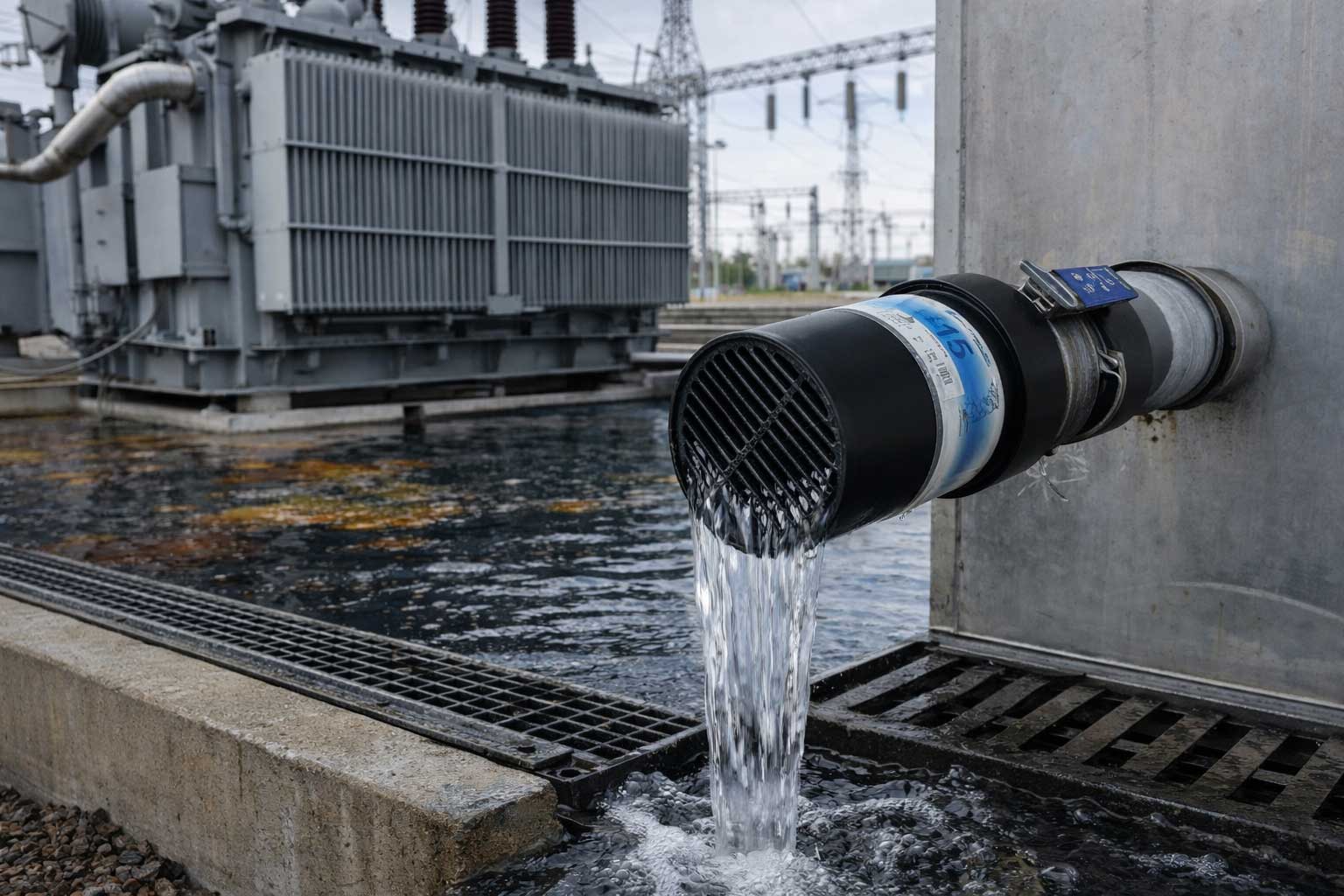
A rainwater filtration system installed in transformer retention areas is designed to separate water from hydrocarbons before discharge. When rainwater accumulates, it flows through a controlled outlet equipped with filtration media or hydrocarbon-trapping technology.
The system allows water to pass while blocking dielectric oils and other pollutants. In case of a significant oil leak, the filtration device immediately absorbs hydrocarbons and automatically stops flow, keeping the contaminated liquid inside the containment zone. This approach maintains retention capacity while preventing accidental pollution.
The combination of a retention bund together a rainwater filtration system ensure both environmental protection and continuous site operation.
Stormwater management rules for transformer installations vary by country, but they all pursue the same goal: preventing oil pollution and protecting natural water resources.
United States :
The Environmental Protection Agency (EPA) enforces the Clean Water Act, which prohibits the discharge of oil-contaminated water into the environment. Electrical substations must implement containment measures and appropriate filtration systems under Spill Prevention, Control, and Countermeasure (SPCC) requirements.
Australia :
State environmental authorities require operators to manage and treat stormwater runoff to prevent hydrocarbon pollution. Transformer sites must therefore include bunded areas and stormwater treatment solutions to protect soil and water quality.
United Kingdom :
The Environment Agency applies legislation such as the Water Resources Act and oil storage regulations. These rules make secondary containment systems and oil-water separation or filtration devices essential to avoid environmental contamination from transformer oil leaks.
What this means for operators?
In all these regions, companies are responsible for ensuring that rainwater mixed with oil is not discharged untreated. Collecting contaminated runoff in transformer bunds and treating it through dedicated filtration systems is a key step toward environmental compliance, while also supporting safe and reliable site operations.
Several Akhelec technologies are specifically designed to manage rainwater in transformer containment areas while preventing hydrocarbon pollution.
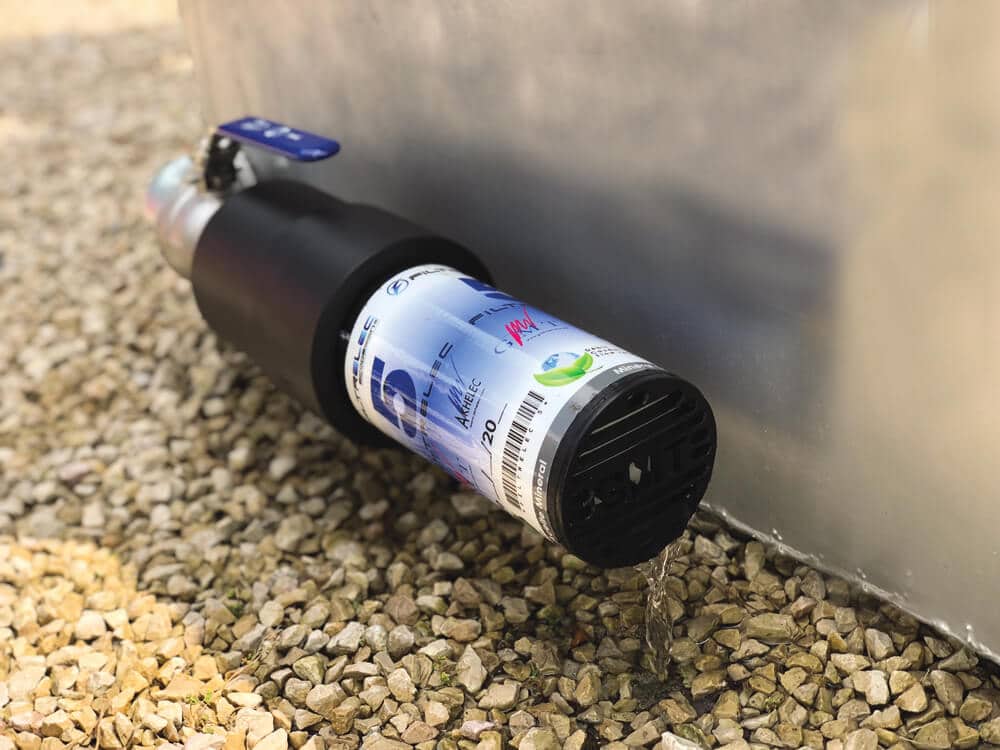
F5 and F15 are designed to remove hydrocarbons from rainwater flowing through transformer retention areas. They use an oleophilic and hydrophobic polymer that permanently captures oil while allowing clean water to pass.
Both systems ensure a discharge quality below 5 mg of hydrocarbons per liter. The F5 model is suited for low-flow applications up to 5 L/min, while the F15 handles moderate flow rates up to 15 L/min and is available in screw or seal configurations.
F-ULTIME is intended for substations with high rainfall volumes or stricter environmental constraints.
With a flow capacity of up to 1500 L/min, it efficiently removes hydrocarbons and suspended pollutants, also guaranteeing a contamination level below 5 mg/L after filtration.
It is adapted to heavy-duty industrial and power infrastructure environments.


Holybag® provides a flexible and rapid pollution-control option.
This mobile device separates oil from water, collects hydrocarbons with a storage capacity of 37 liters, and releases treated rainwater with a residual hydrocarbon content below 5 ppm, in line with water quality protection requirements.
FBOX® is a smart filtration unit developed for high-voltage transformer sites.
It combines hydrocarbon filtration with real-time monitoring and automated data reporting, allowing operators to manage stormwater quality continuously and improve operational oversight

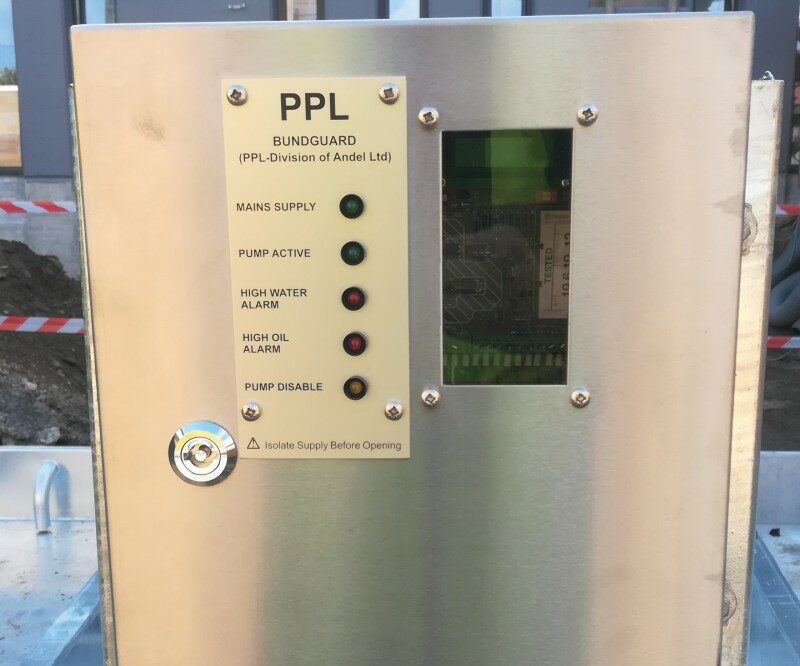
Bundguard® complements filtration by detecting and distinguishing water from hydrocarbons inside transformer bunds.
Together, these systems form a comprehensive approach to rainwater control, filtration, and monitoring around transformers to optimise the on-site maintenance operations frequency.
A rainwater filter system for electrical transformer installations is no longer optional—it is a key component of modern environmental protection strategies. By separating rainwater from hydrocarbons, these systems prevent pollution, support regulatory compliance, and protect both infrastructure and ecosystems.
With advanced filtration and monitoring technologies, operators can safely manage stormwater while maintaining full control over environmental risks in transformer areas.
We offer environmental protection solutions for electric power transformer stations. Our services include: consultancy, design and assistance.
AKHELEC is a subsidiary of GMT International group, which has been providing support to businesses in the energy and environmental protection sectors for over 20 years.
Copyright © AKHELEC 2023